.avif)
Choice Architecture • The Secret to Follow-Through
.png)
Design systems that reduce friction, prevent overwhelm, and make environmental action easier.
Getting someone interested in climate action is only the beginning. The harder problem is getting them to actually follow through.
Every extra choice, instruction, decision, click, and competing action creates cognitive load. And when we ask people to navigate too much complexity, they often do the simplest thing of all: nothing.
Choice Architecture is about deliberately designing the pathway around an action so people can move forward without getting confused, overwhelmed, or dropping out.
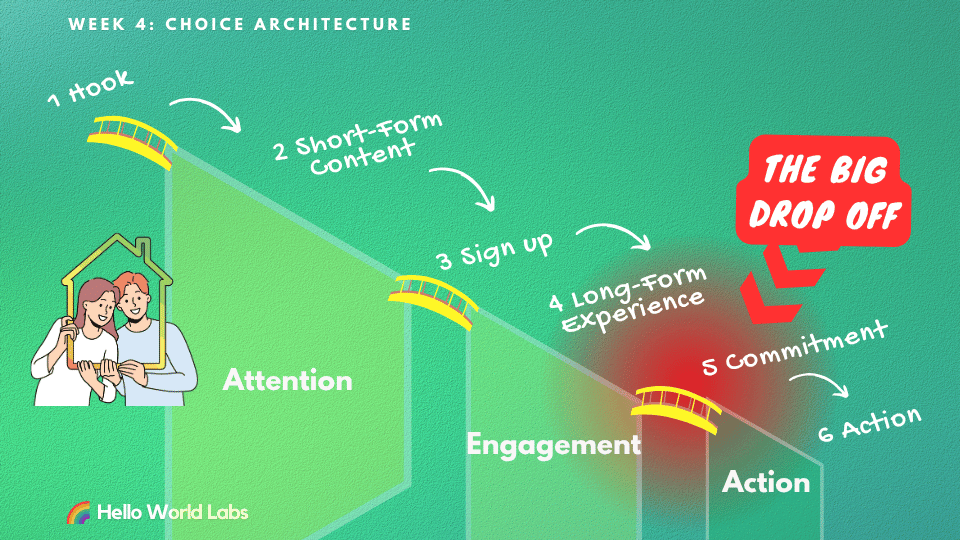
THE BIG IDEA
If you confuse, you lose.
Our brains have limited bandwidth. Give people too many choices at once and even a simple sustainability program can quickly become cognitively overwhelming.
The solution isn't necessarily to give people more information. It's to design the choices themselves.
In this workshop, you'll learn how to reduce unnecessary cognitive load, organize complexity, and create pathways that make the next action feel clear and achievable.
The goal: people effortlessly take action without resistance.

.png)
WHAT YOU'LL LEARN
You'll explore practical Choice Architecture techniques including how to:
Reduce cognitive load and remove unnecessary complexity
Design better defaults so the easiest choice supports the desired behavior
Declutter the action pathway instead of presenting people with endless green choices
Filter actions by person type so people only see options relevant to them
Group choices into manageable sets instead of overwhelming lists
Sequence actions to build momentum over time
Use commitment moments to turn intention into follow-through
Design for different dimensions such as impact, difficulty, cost, and time
Test the experience with real users before launching it into the world
WHAT'S INCLUDED
Choice Architecture Template — map and simplify the pathway to action
Cognitive Load Checklist — identify where your audience may be getting overwhelmed
Workshop Slides & Reference Materials — keep the frameworks and techniques on hand
Hands-on Design Homework — apply the methods directly to your own project
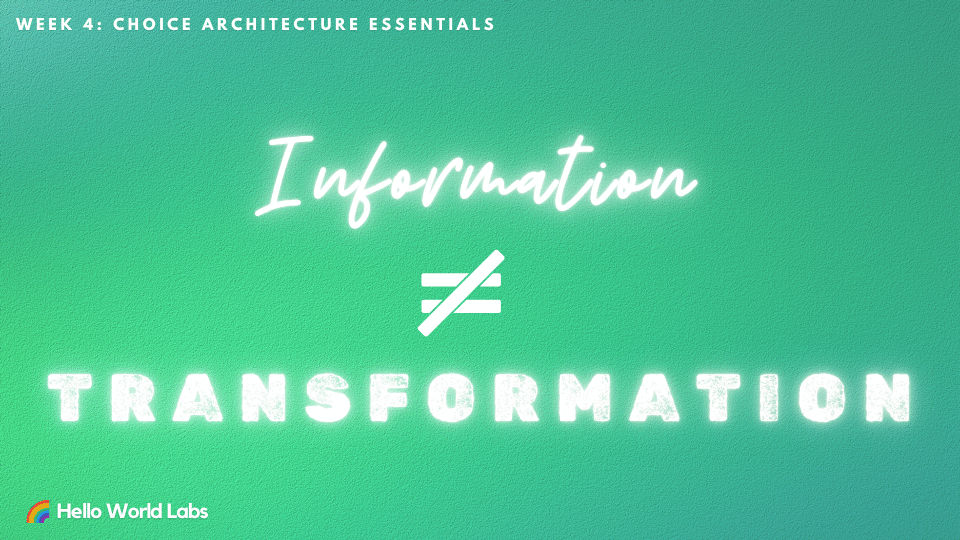
FROM INFORMATION → TRANSFORMATION
Most environmental programs are excellent at giving people information.
But information ≠ transformation.
Transformation requires someone to move through an actual experience:
Goal → Commitment → Tracking Progress → Completion
Choice Architecture helps you deliberately design that experience—rather than simply giving people a list of things they could do and hoping something happens.
SEE IT IN ACTION
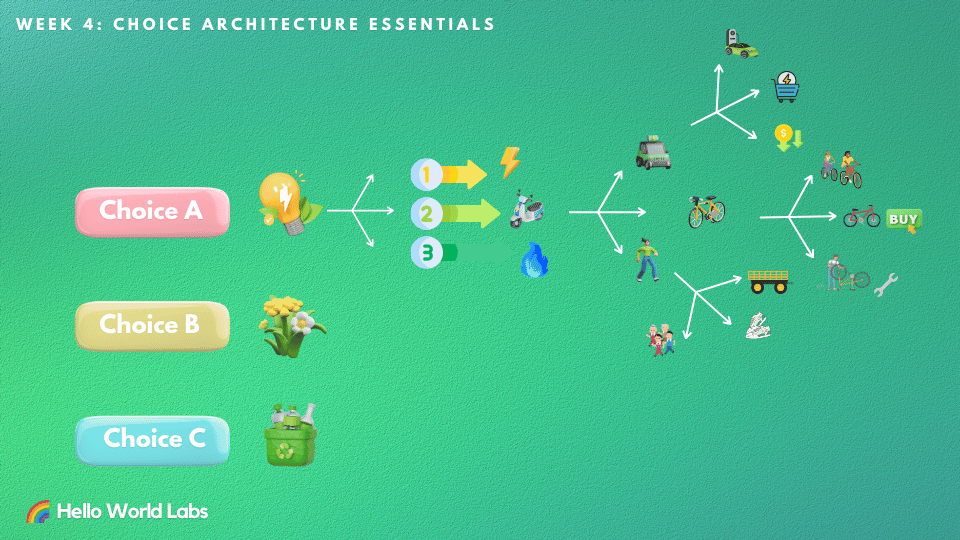
Imagine asking someone to “go green” and giving them a list of 35 different actions.
Which should they do first?
Which applies to their home?
Which has the greatest impact?
Which can they afford?
What happens after they complete it?
Choice Architecture transforms that giant list into a designed pathway.
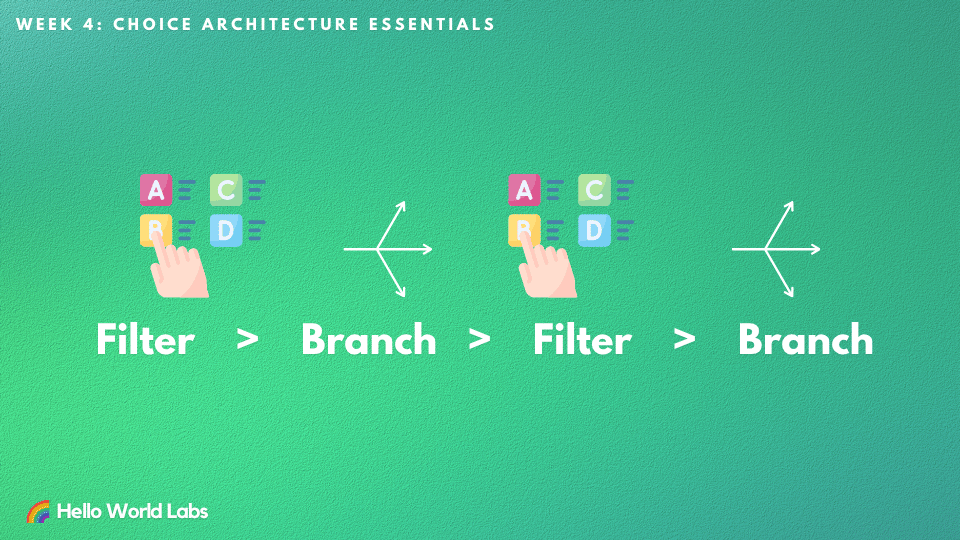
Filter → Group → Sequence → Act → Progress
Instead of making your audience do the cognitive labor, you do the cognitive labor as the designer.
APPLY IT TO REAL CLIMATE ACTION
We'll explore how these principles can be applied to real environmental programs—from home energy and electrification to food, waste, transportation, water, and community action.
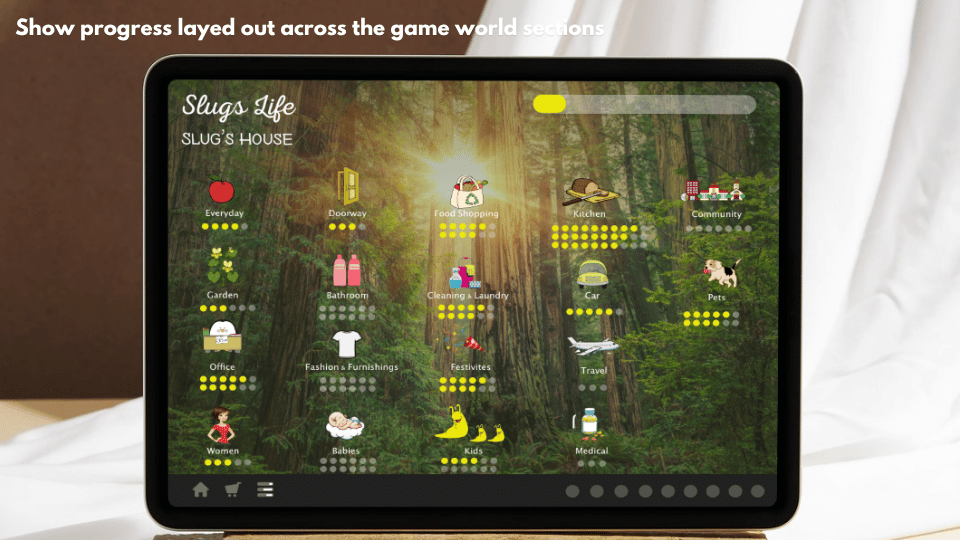
You'll see examples of how seemingly small design decisions can completely change the experience: defaults, filtering questions, action groupings, branching pathways, progress indicators, commitment mechanisms, and rewards.
And you'll learn how to recognize where your own program may be unintentionally making action harder than it needs to be.
THE SIX-STEP ACTION PATHWAY
You'll also see Choice Architecture applied to a complete environmental action experience:
1. Show the action
2. Show the opposing action
3. Ask if they want to do it
4. Ask for a commitment
5. Confirm the commitment
6. Reward progress
These seemingly small moments can turn a passive sustainability resource into an experience designed for actual participation and follow-through.
THIS IS ONE PART OF THE SCHOOL OF CLIMATE ACTION DESIGN
Choice Architecture is one of the core systems you'll learn and apply inside the School of Climate Action Design.
Across the six-week cohort, we move beyond awareness campaigns and information-heavy sustainability programs to study how humans actually move from attention to action.
You'll learn practical frameworks for mapping behavior, designing engagement pathways, applying behavioral psychology, reducing friction, gamifying participation, tracking progress, and designing systems that make change happen.
Choice Architecture is one piece of the complete Action Design system.
WANT TO LEARN THE WHOLE SYSTEM?
Join sustainability professionals from around the world for six weeks of live workshops, practical frameworks, design tools, and hands-on application.
Bring a real environmental challenge. Leave with a system designed to move people from attention → engagement → action.
JOIN THE ACTION SCHOOL WAITLIST →
Event info


.png)
.png)
.png)