.avif)
.svg)
Thank you! Your submission has been received!
Oops! Something went wrong while submitting the form.



In six weeks, you'll learn how apply behavioral science, systems design, storytelling and gamification to your sustainability project to turn it into an action-optimized program built to scale.
Join the Waitlist for an InviteNext Cohort Starts September 17 • Six Weeks • Live Online
.avif)
%20(1).png)
Leave with a system to make it work
Action School is a 6-week, live online program where you'll design, test, and refine your real-world climate program with expert guidance and a community of changemakers.
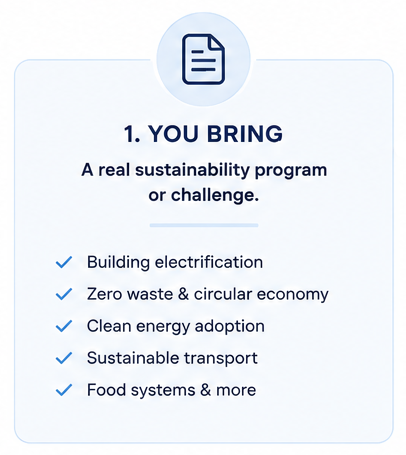
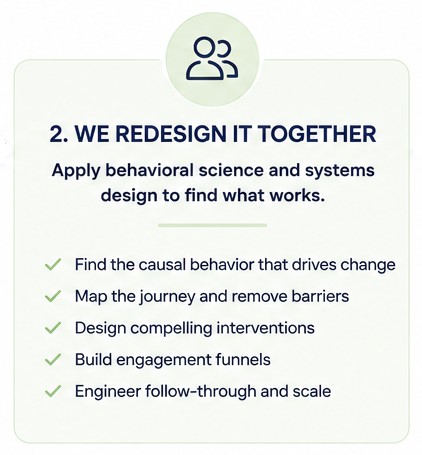
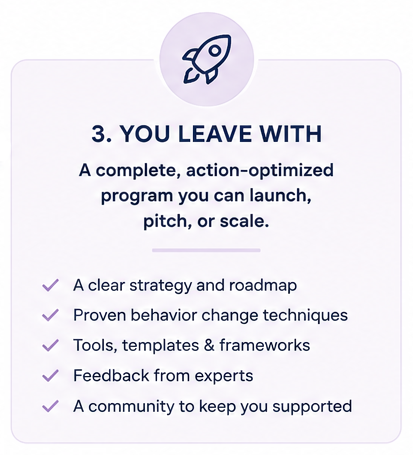
.png)
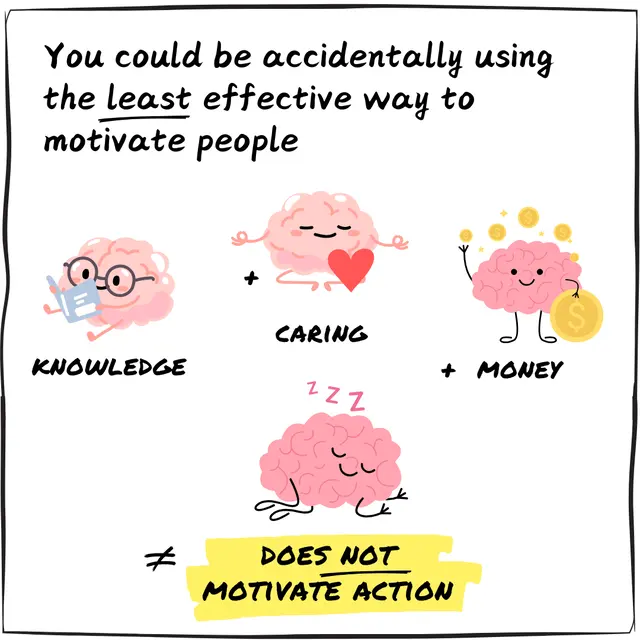
A complete operating system to co-design your concepts, marketing, and tools with direct expert support.
Ultimate systems design method that sandblasts blindspots and unearths crystal clear ideas that trigger action.
The 12-step formula you need to tell your sustainability story in a way that ignites a movement.
Build a proven six-step system that grabs attention, fosters engagement, and converts people to take action.
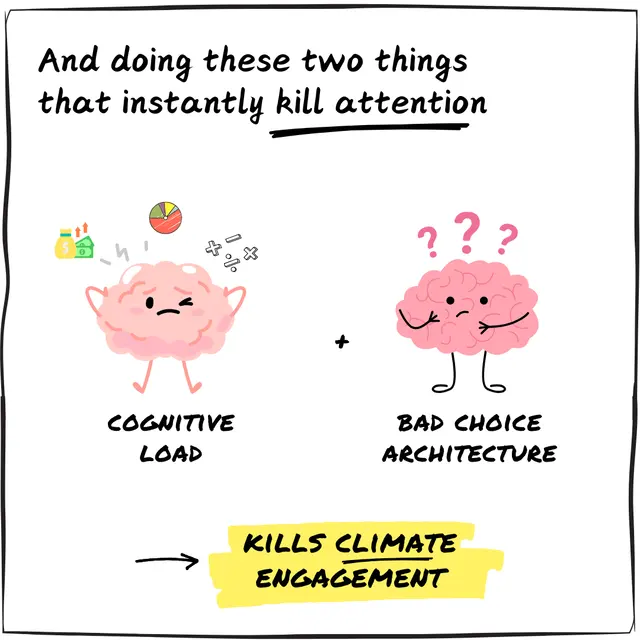
Design choices that reduce cognitive load and make the desired action easier to complete.
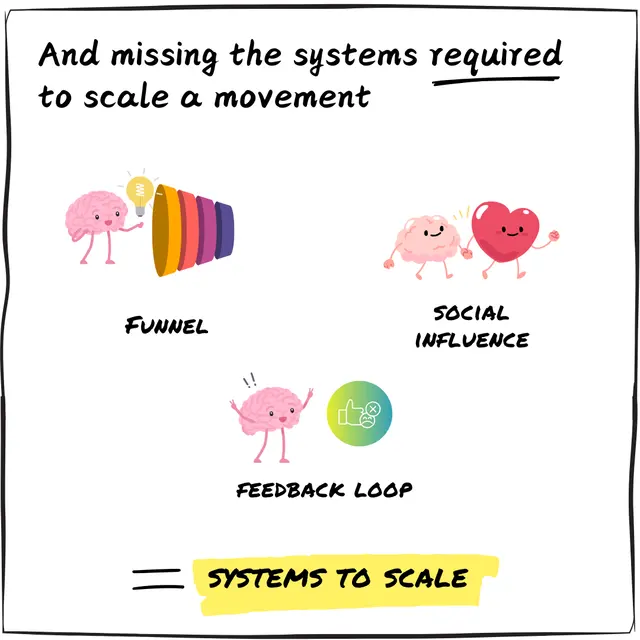
Use identity, teams, progress, feedback and social dynamics to sustain collective action.
.png)
Package the finished program and present it for expert critique.
Available only to new members of the Climate Action School Community.
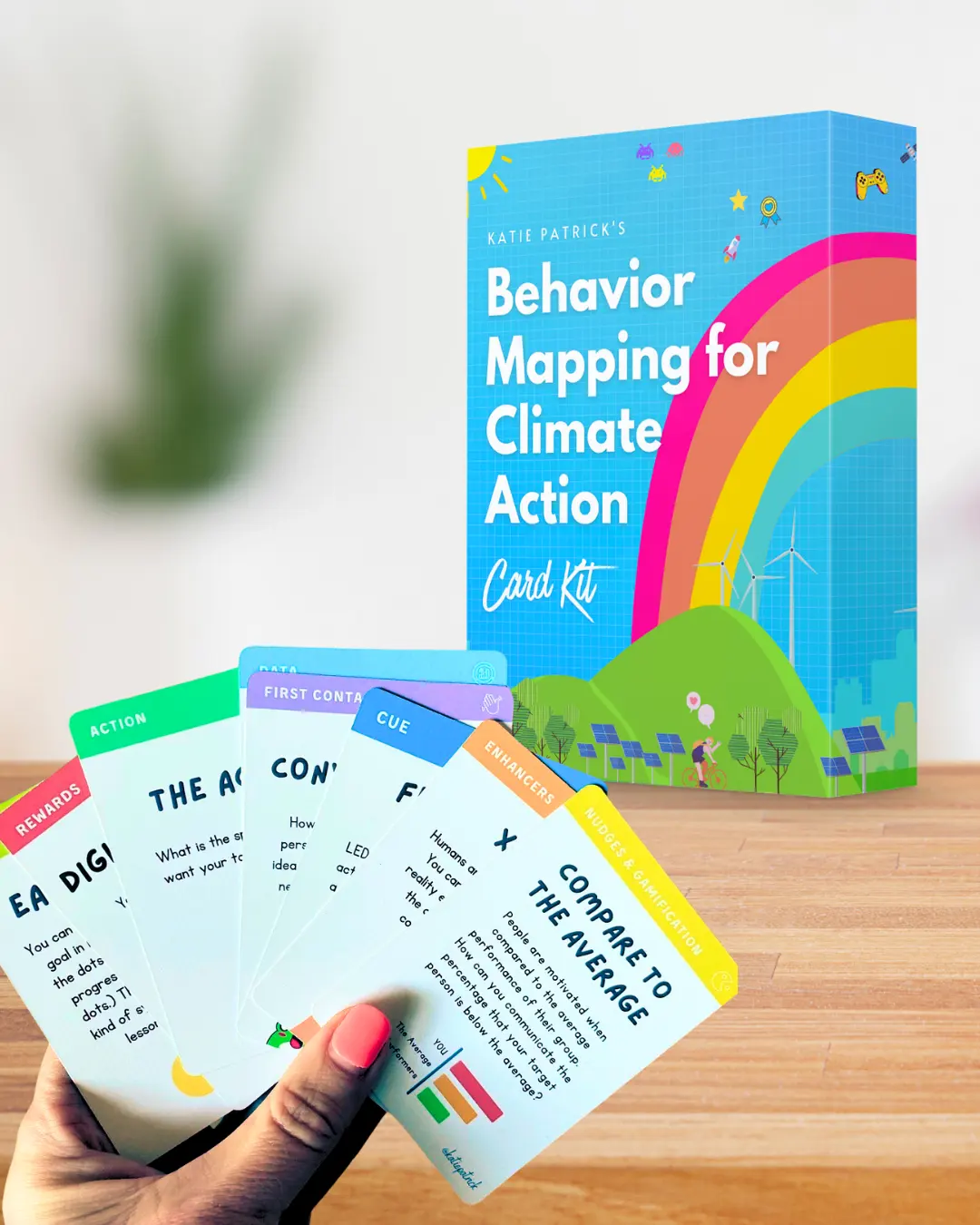
Be the first to get your physical card kit mailed to you.
Use Katie's Behavior Mapping for Climate Action Card Kit to get your best ideas and problem solve your trickiest sustainability engagement problems.
The box includes 96 data-driven ways to influence people in a repeatable 10 step formula.
Level up your climate program’s effectiveness with insights, advice, and mentoring from the world's leading published researchers.

Professor of Environmental Psychology, Otto-von-Guericke University

Director of Community Engaged Learning in Sustainability at Stanford University.

Chancellor's Professor, School of Social Ecology, University of California, Irvine

Associate Professor of Environmental Psychology, Ohio State University

Professor of Environmental Psychology, The University of Waikato

Social and Environmental Psychology Postdoc at Boston College.

Professor & Researcher of Environmental Psychology, Arizona State University

Consumer Behavior Neuroscientist, Senior Researcher, University of Trento

Director, Behavioral Science Rare, Center for Behavior & the Environment
.png)
Postdoctoral Researcher | Environmental Psychology & Behavioral Science for Policy
University of Konstanz
.png)
Postdoctoral Researcher at ETH Zurich | Lecturer | Sustainable Food Systems & Policy
.png)
Associate Professor in Social and Environmental Psychology
University of Groningen
The hands-on team of practical mentors you need to make the elements of your program excellent.

Associate Professor of Graphic Design
University of Illinois
Educator, designer, author, papermaker, podcaster
.png)
Design Partner for Climate Companies | Behavior Designer ThriveKite
.png)
Community Architect
Helping Online Community Hosts Grow and Monetize their Communities
.png)
Creative Director, Brand Strategist, Publication Designer
The Bridge Studio
Join a community of world-leading climate and sustainability managers.

Live Q&A with Katie and expert brains-trust to problem-solve and get feedback.

DM Katie and other expert environmental psychology mentors for advice, questions, and feedback.

No recurring fees. Get lifetime access to the courses, downloads, and community.

Upon joining, you'll be assigned to a pod of 4 to 5 other members to provide weekly accountability, friendship, and ideas.

Submit your action-optimized project upon completion to receive your official hard-copy graduation certificate from Hello World Labs.
Behavior design is the missing link to effective climate engagement

The EPA's mandatory disclosure of toxic chemicals caused a 45% reduction in chemical use over five years.

Characters that show a happy or sad expression depending on energy performance get a 47% better response than a color or number gauge.

Real-time displays showing kWh got households to cut energy consumption by 8%.

Showing energy use in terms of CO2 from electricity gets a 16% better response than showing use in kWh amongst Democrat voters.

Showing households how their energy use compared with their neighbors reduced energy consumption by 6.3% among the highest energy users.
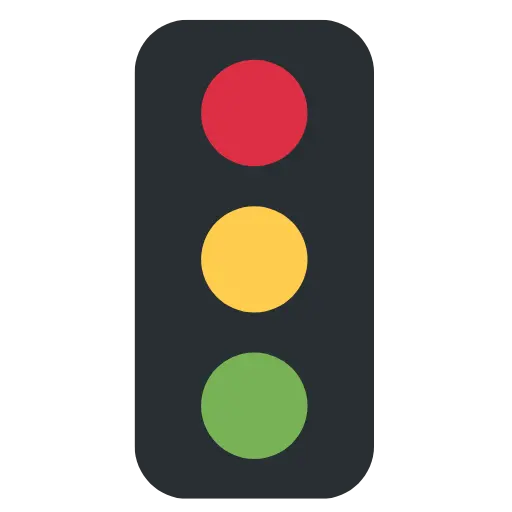
A light that communicates energy consumption using colored LEDs gets people to save 24% more electricity than showing energy use in numerical kWh.

Asking people to write down a pledge and posting it publicly increases a person's retention to that commitment by 74%.

Asking pilots to achieve a specific fuel-saving goal got aircraft to reduce fuel use by 12%.

People are 27% more likely to take on a new green behavior after they move house.

Comparing people of smaller and more similar groups, such as house vs house, saved 34% more energy than when shown grouping many residences.
Meta research shows that neighbor block leader programs are more influential than any other mechanism at encouraging conservation behavior.
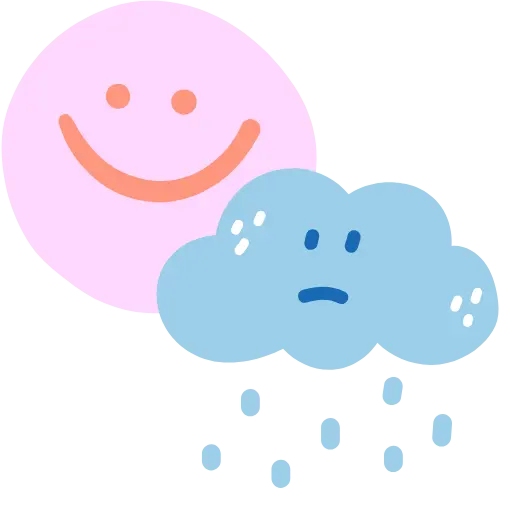
Showing people their environmental performance is below average (guilt) gets a better response than showing people they perform above average (pride).
Environmental Engineer, Author, Podcast Host, TEDx Speaker, and Chief Action Designer at Hello World Labs.
Hello, Green Leader 👋🌱,
Do you need to persuade your community to sign up and take action? I can help. I've spent 20 years creating:
🌈 Engagement tools for big organizations like UNEP, NASA, Stanford, and Google.
📊 Technical dashboards for commercial building portfolios.
🏆 Easy low-tech gamification tools for grass-roots environmental groups.
📧 Funnel systems that have signed up over 100k people to join sustainability causes.
I wrote the world's first book on environmental behavior design and gamification, How to Save the World: How to Make Changing the World the Greatest Game Ever Played – now taught at Harvard University's Sustainable MBA program.
Having graduated from Environmental-Civil Engineering and working on some of the world’s first platinum-LEED-certified buildings, my approach is always evidence-based and quantitative (while still being fun and creative), building from core metrics of feedback loops of environmental data.
Hello World Labs is a design and technology lab specializing in helping sustainability managers develop tools and programs that get audiences to engage and take action.
We take a deeply evidence-based and data-driven approach to encouraging pro-environmental behavior by gathering expertise and insights from world class experts with published peer-reviewed research.
Our specialty is urban sustainability applications including building decarbonization, zero-waste, urban heat, and car-free transit.
For the first time, we've put our signature design process into a community learning platform. Join us!
