

Thank you! Your submission has been received!
Oops! Something went wrong while submitting the form.


A complete end-to-end behavior change program to encourage more cycling and less car use in your city
Inquire Now).png)
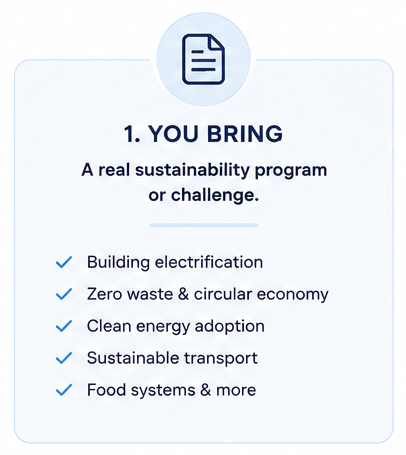
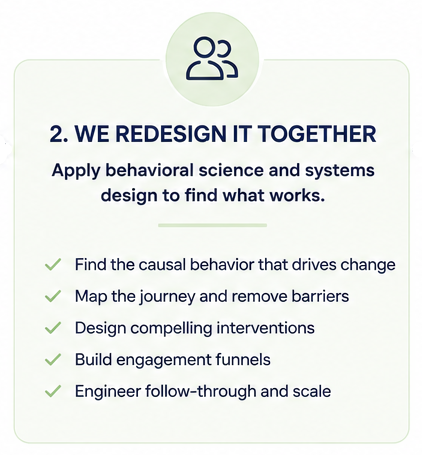
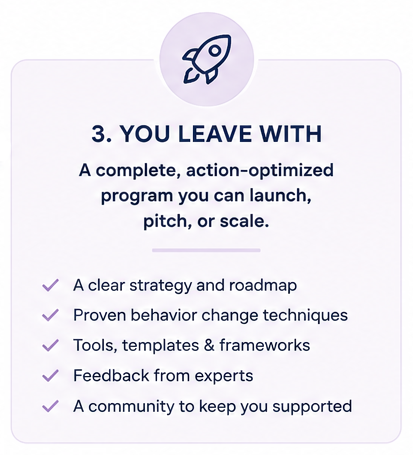
Action School is a 6-week, live online program where you'll design, test, and refine your real-world climate program with expert guidance and a community of changemakers.

Join a community of world-leading climate and sustainability managers.
Live Q&A with Katie and expert brains-trust to problem-solve and get feedback.

DM Katie and other expert environmental psychology mentors for advice, questions, and feedback.

No recurring fees. Get lifetime access to the courses, downloads, and community.

Upon joining, you'll be assigned to a pod of 4 to 5 other members to provide weekly accountability, friendship, and ideas.

Submit your action-optimized project upon completion to receive your official hard-copy graduation certificate from Hello World Labs.
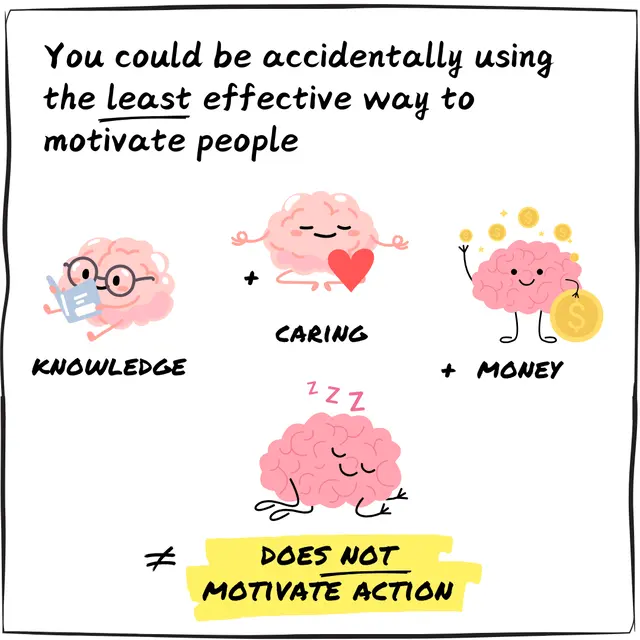
Behavior design is the missing link to effective climate engagement

The EPA's mandatory disclosure of toxic chemicals caused a 45% reduction in chemical use over five years.

Characters that show a happy or sad expression depending on energy performance get a 47% better response than a color or number gauge.

Real-time displays showing kWh got households to cut energy consumption by 8%.

Showing energy use in terms of CO2 from electricity gets a 16% better response than showing use in kWh amongst Democrat voters.

Showing households how their energy use compared with their neighbors reduced energy consumption by 6.3% among the highest energy users.
A light that communicates energy consumption using colored LEDs gets people to save 24% more electricity than showing energy use in numerical kWh.

Asking people to write down a pledge and posting it publicly increases a person's retention to that commitment by 74%.

Asking pilots to achieve a specific fuel-saving goal got aircraft to reduce fuel use by 12%.
People are 27% more likely to take on a new green behavior after they move house.

Comparing people of smaller and more similar groups, such as house vs house, saved 34% more energy than when shown grouping many residences.

Meta research shows that neighbor block leader programs are more influential than any other mechanism at encouraging conservation behavior.
Showing people their environmental performance is below average (guilt) gets a better response than showing people they perform above average (pride).