.avif)
Energy Leaderboard + Worksheet
A classroom activity where students calculate the carbon from a utiltiy bill and rank the emissions in a group leaderboard.
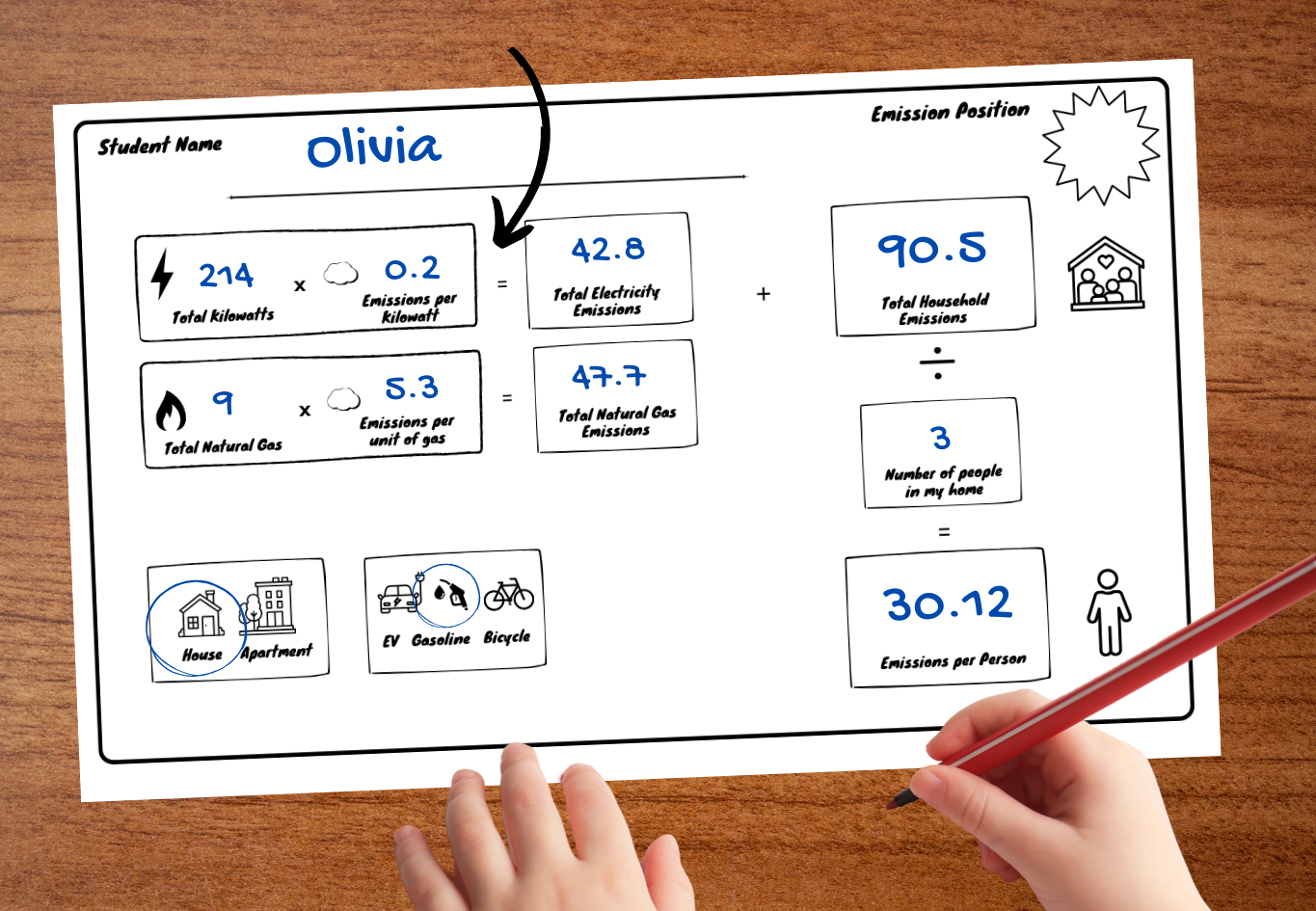
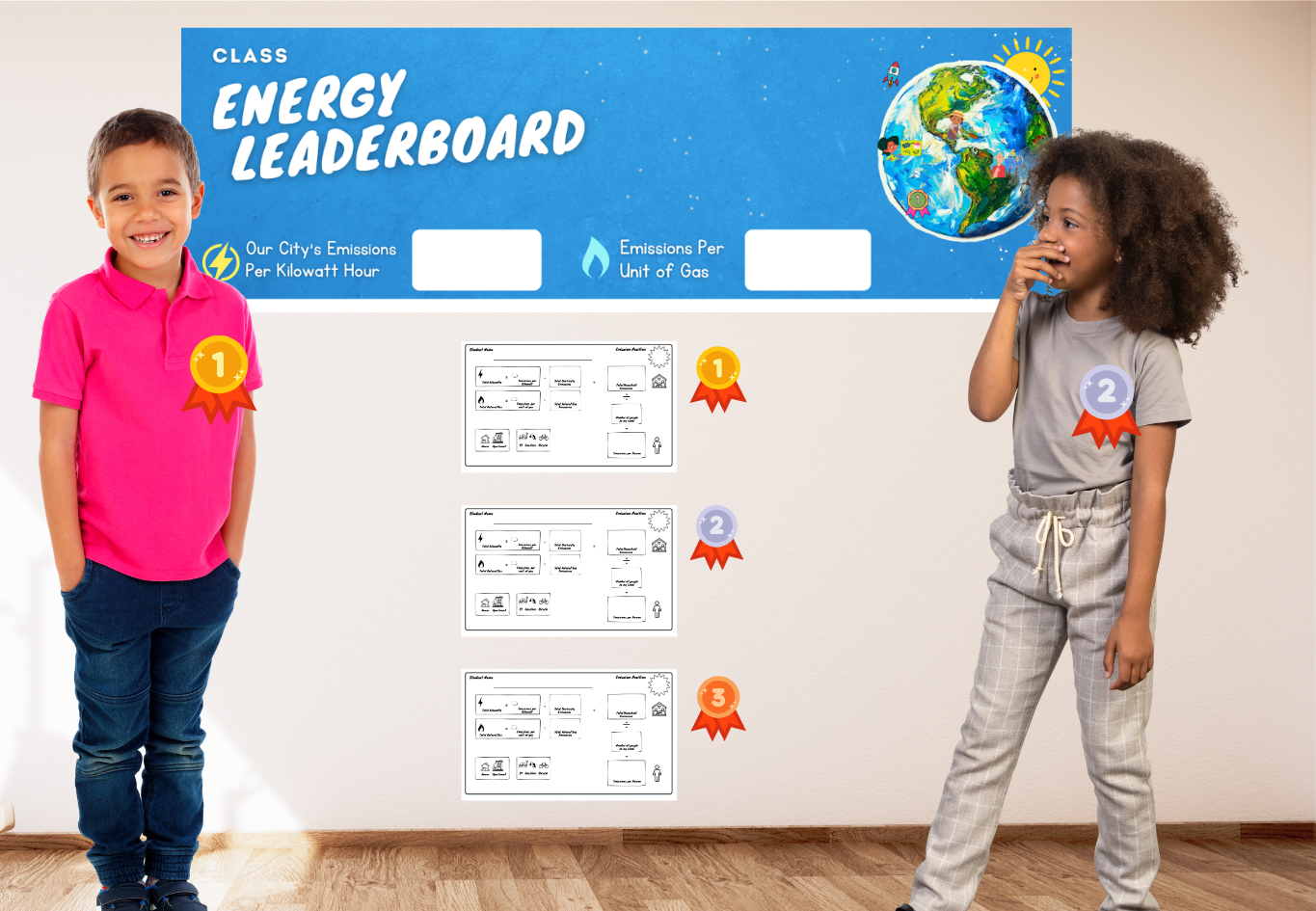
The Energy Leaderboard + Worksheet is a classroom activity that helps students connect their everyday energy use to climate change by calculating the emissions associated with their household electricity consumption. Using information from a utility bill, students estimate their home's carbon footprint and identify practical actions they can take to reduce energy use over time.
The activity combines personal carbon tracking with a classroom leaderboard that allows students to celebrate progress and compare results as a group. Drawing on behavioral science principles including feedback loops, goal setting, social norms, and friendly competition, the program transforms abstract emissions data into a visible and motivating challenge.
By making energy use measurable and providing regular opportunities to track improvement, students gain a deeper understanding of how household behaviors influence climate outcomes. The classroom leaderboard creates positive social reinforcement while encouraging participants to experiment with conservation actions and share ideas with their families. The result is an engaging learning experience that builds climate literacy, agency, and real-world emissions reductions beyond the classroom.
Psychology Techniques

Disclosure

Groups

Identity

Social Comparison

Social Diffusion

Tracking Progress
